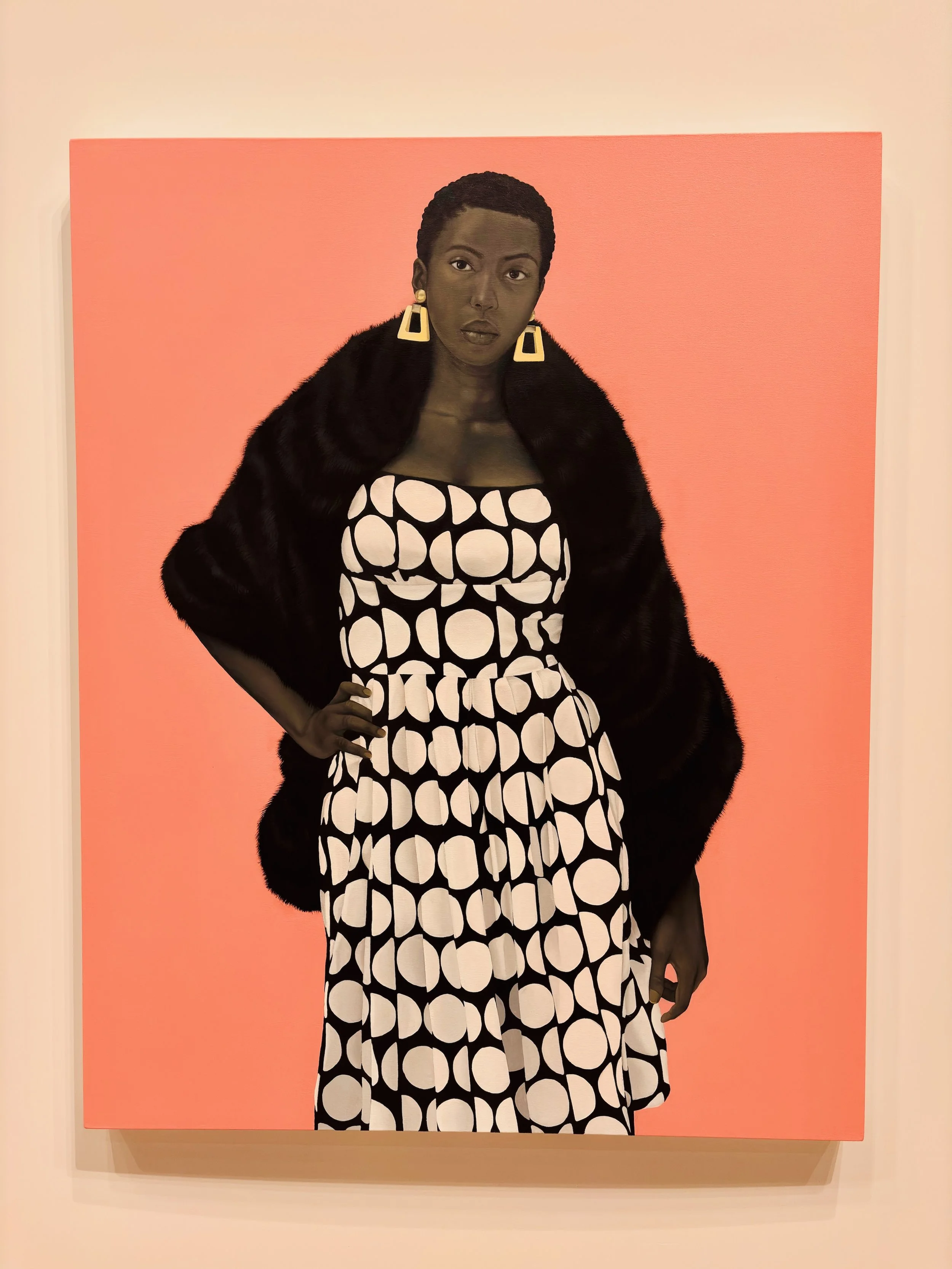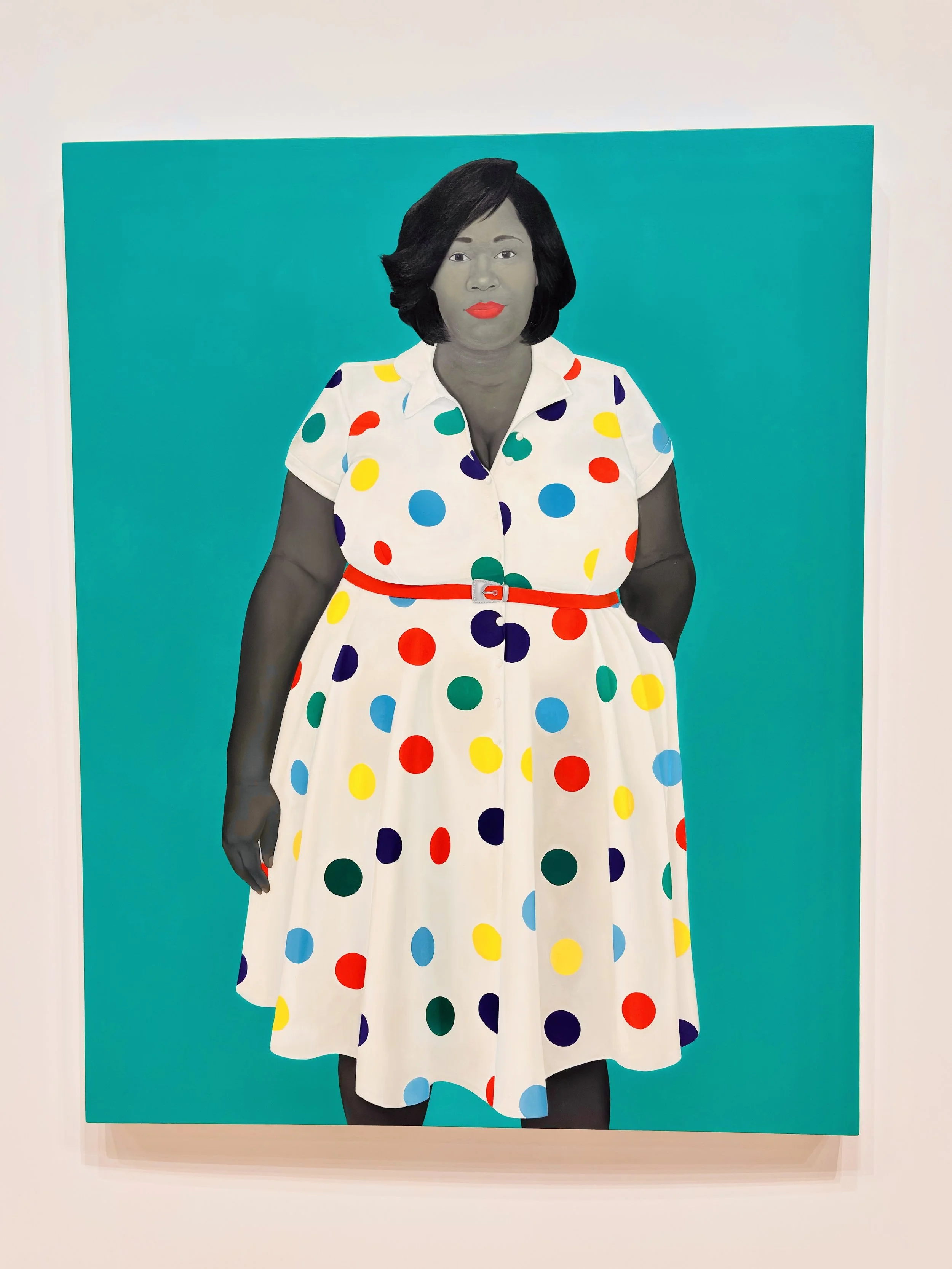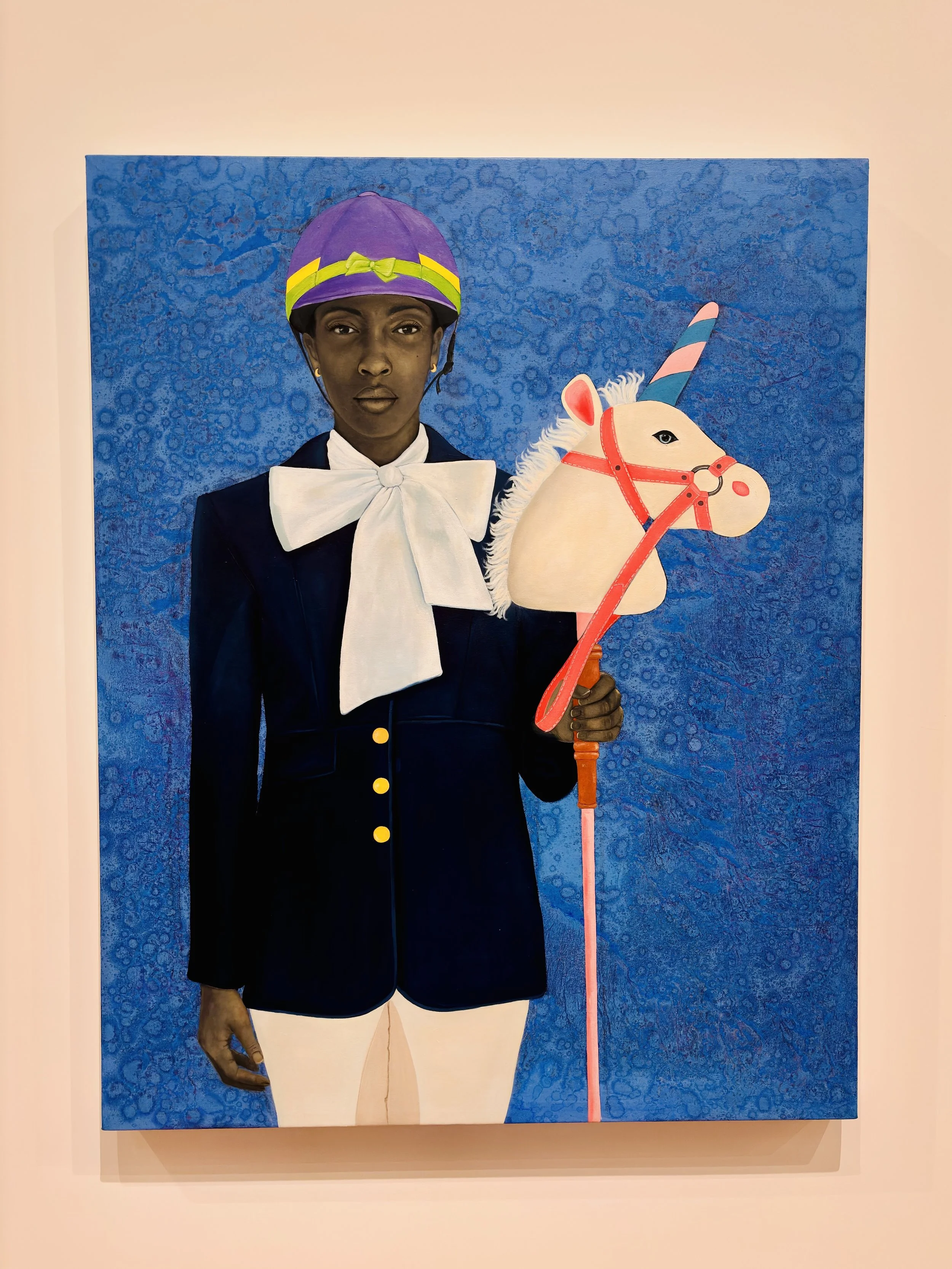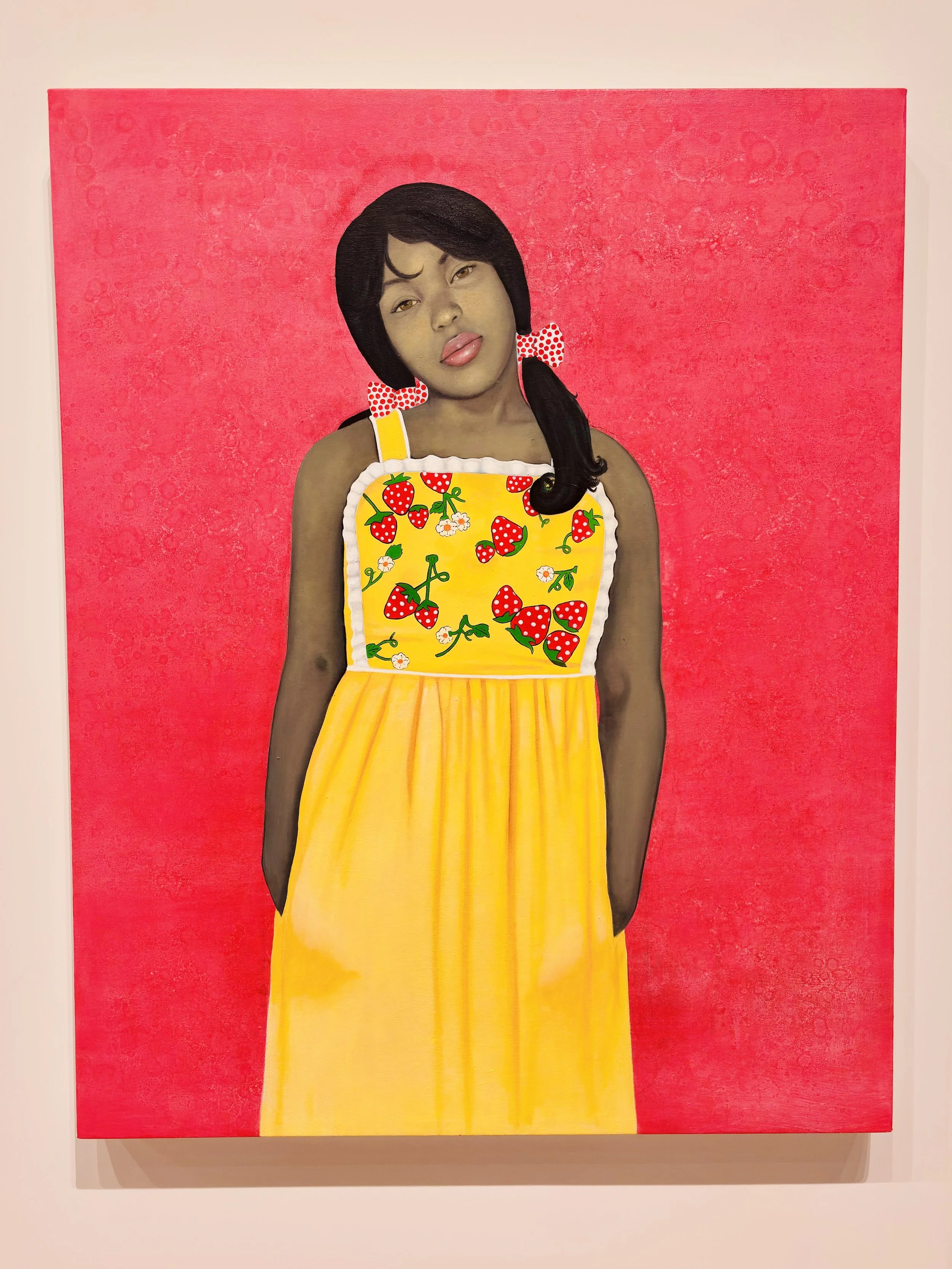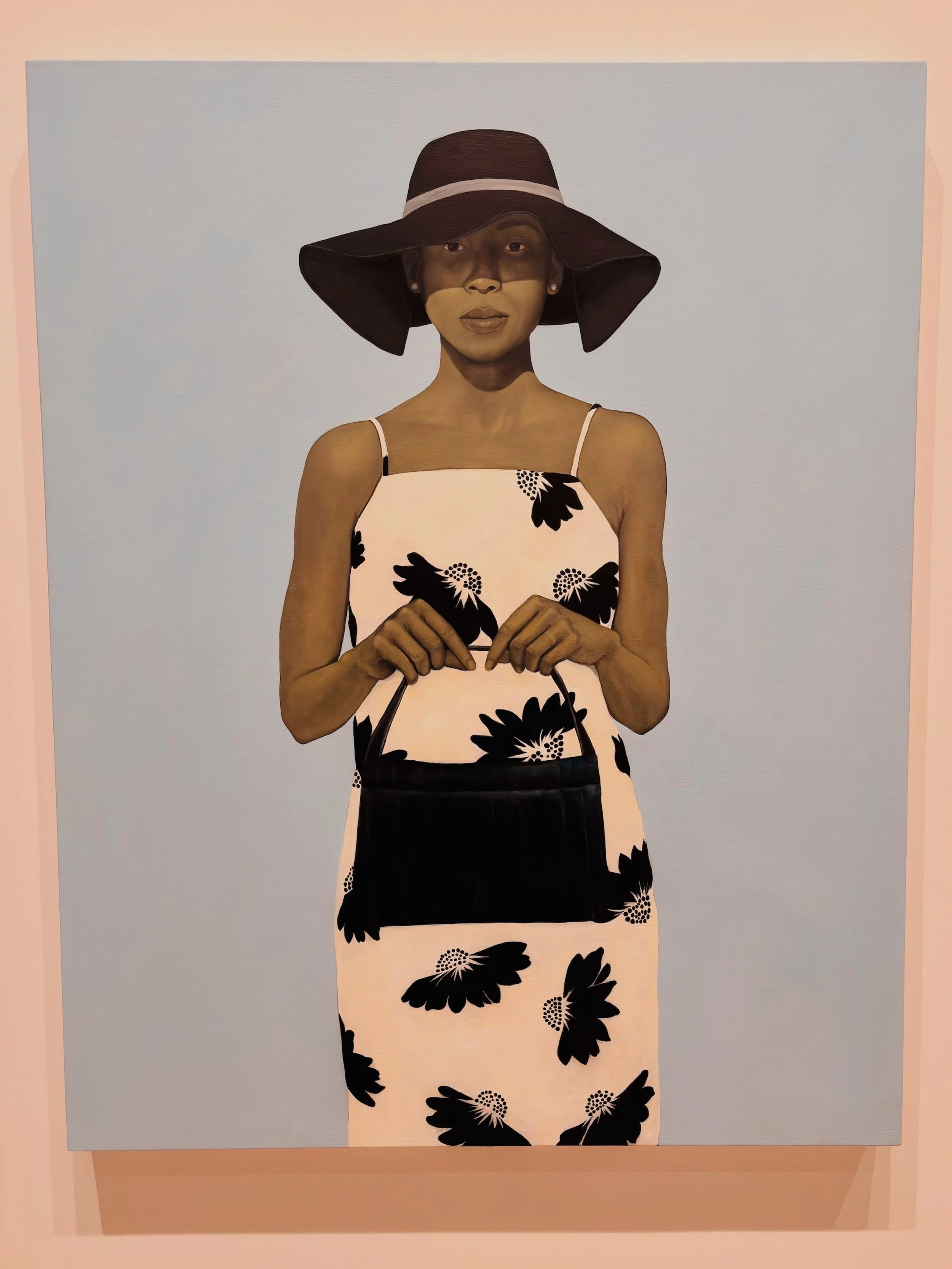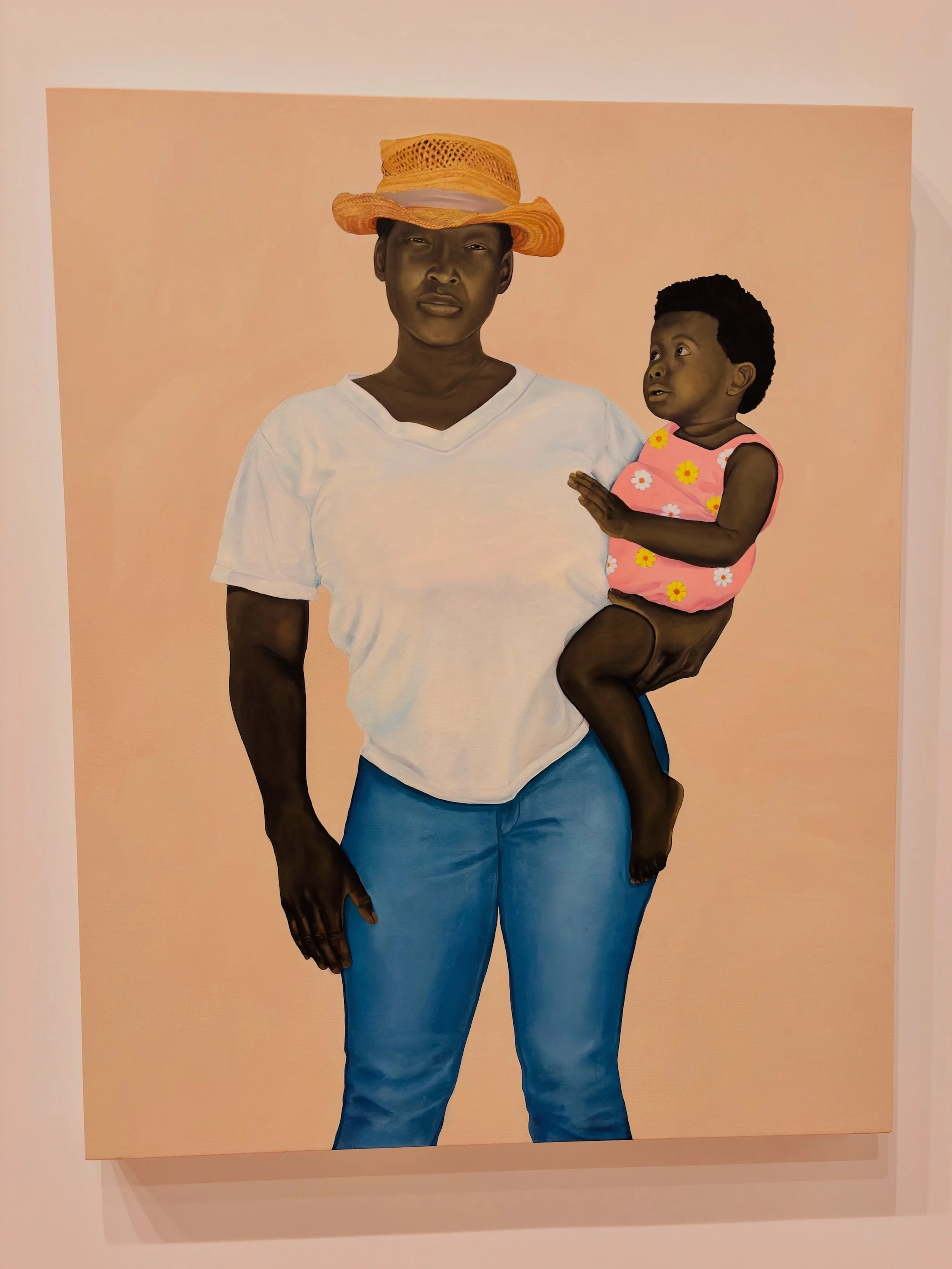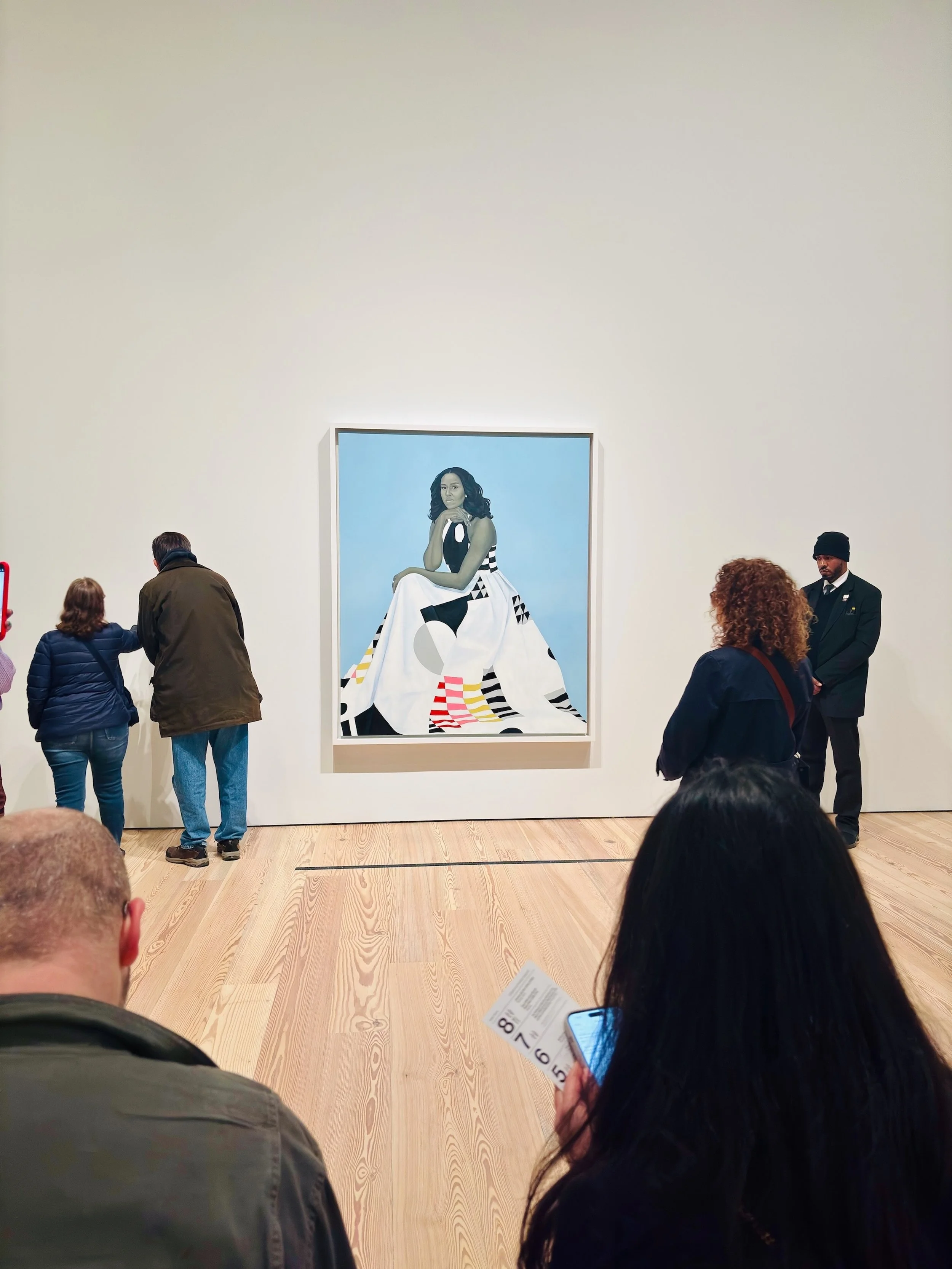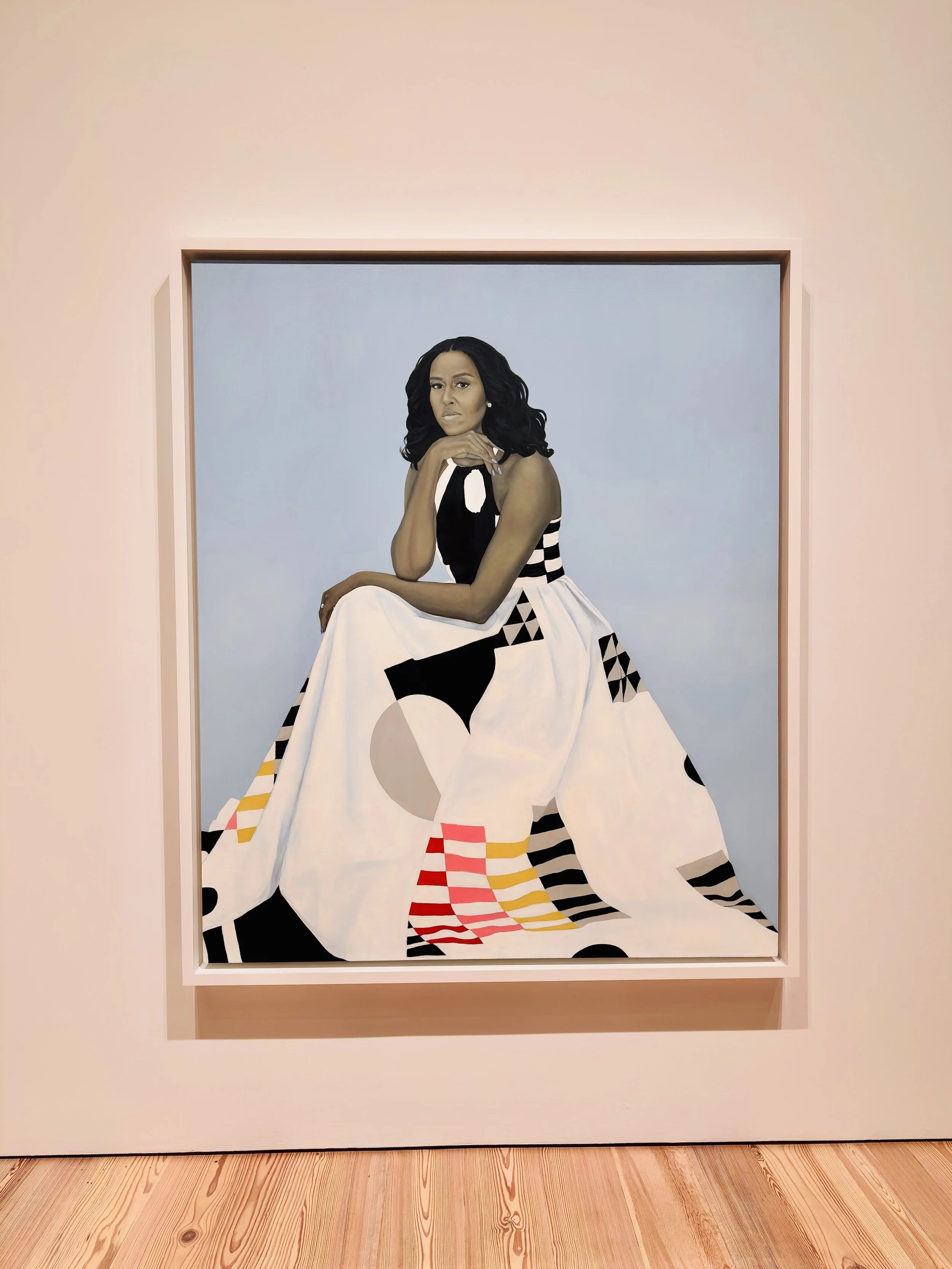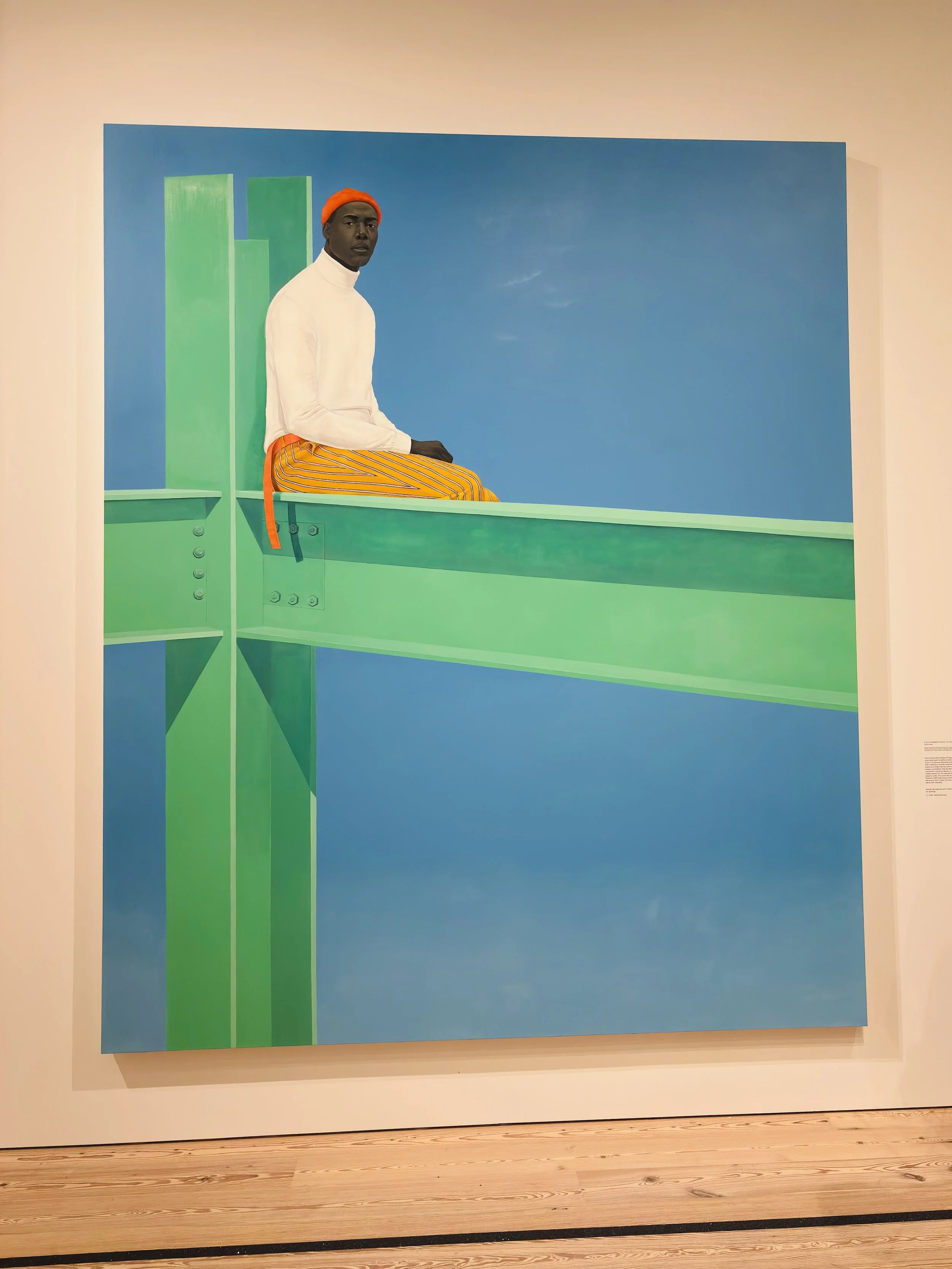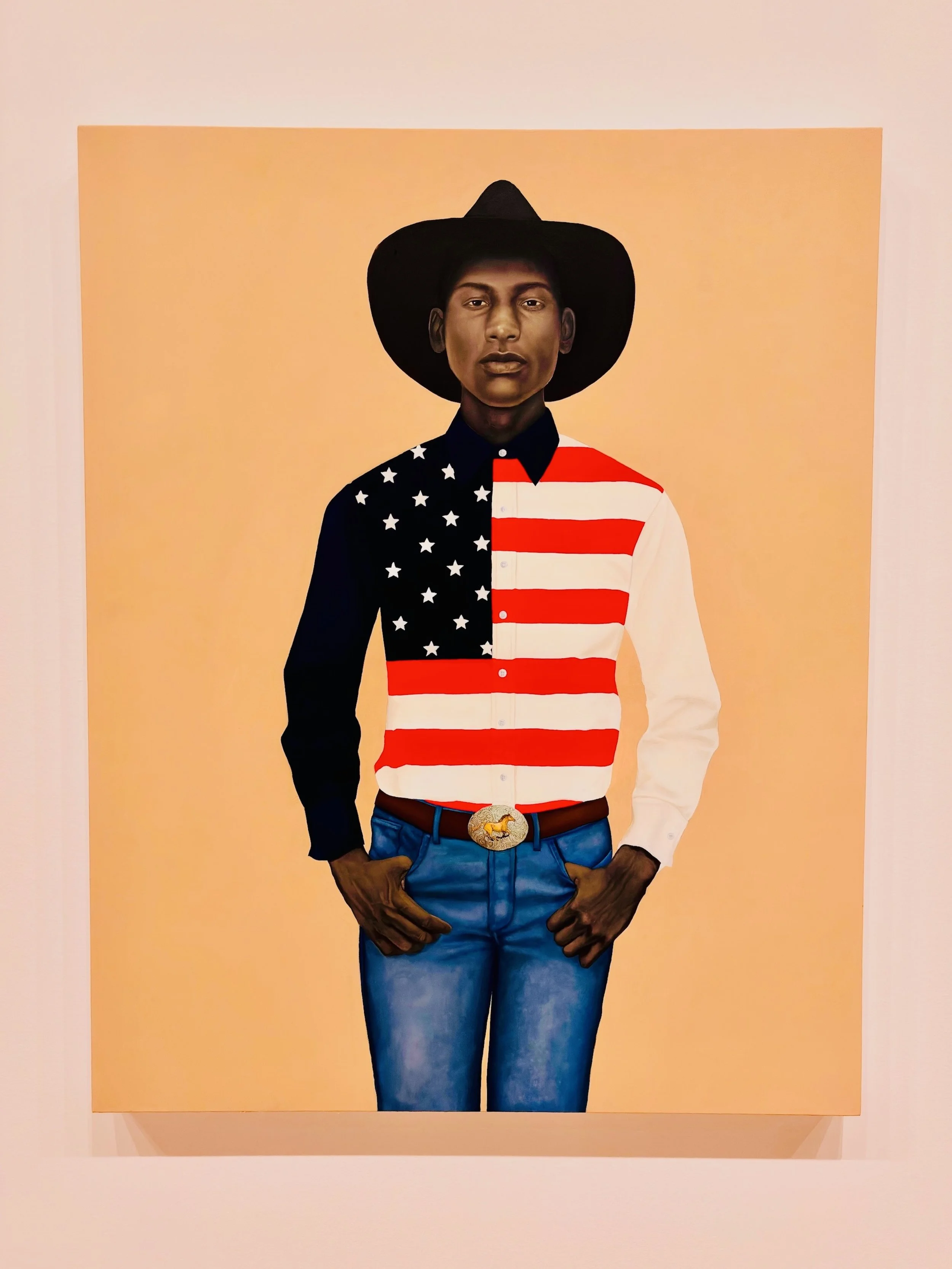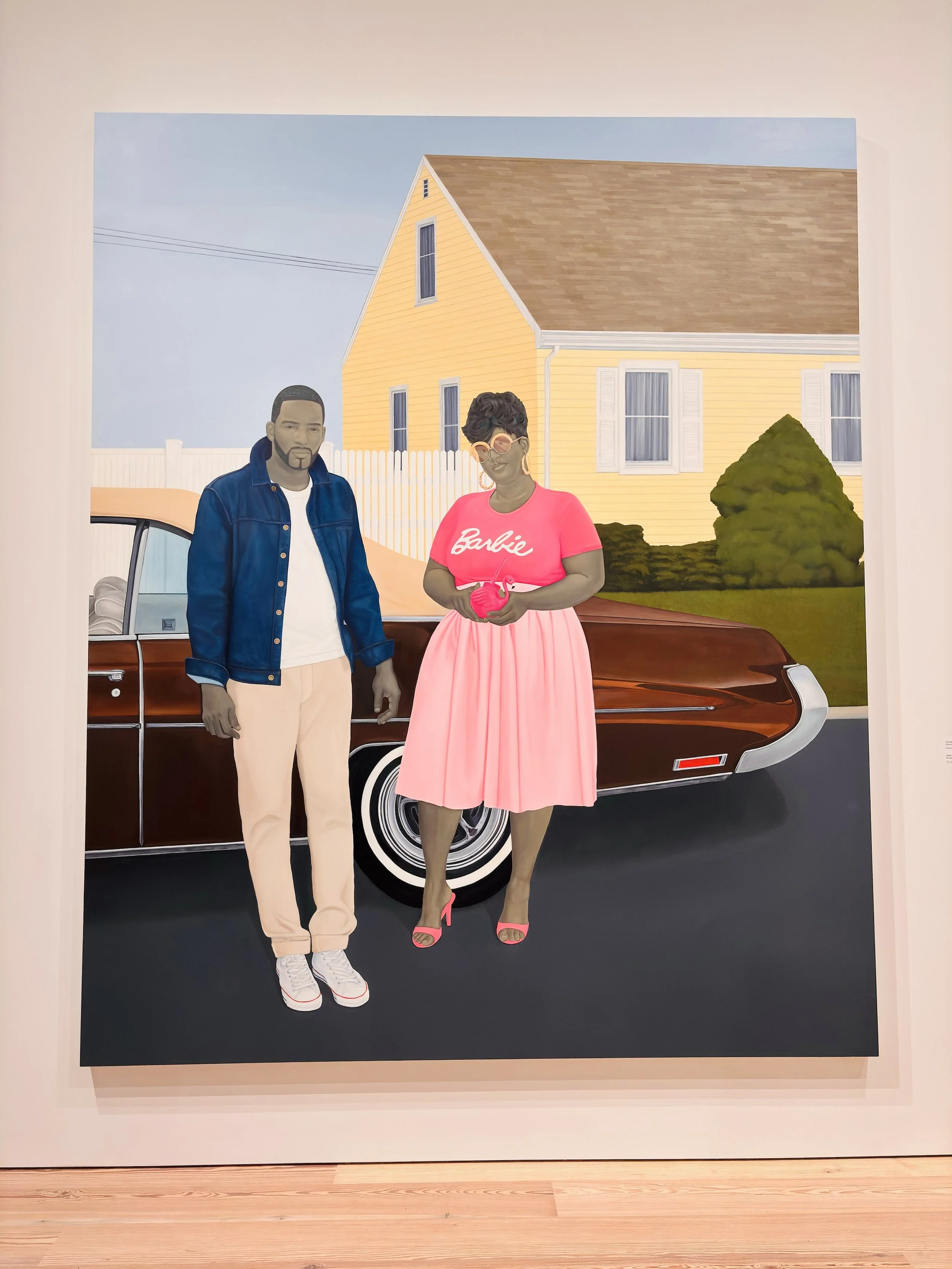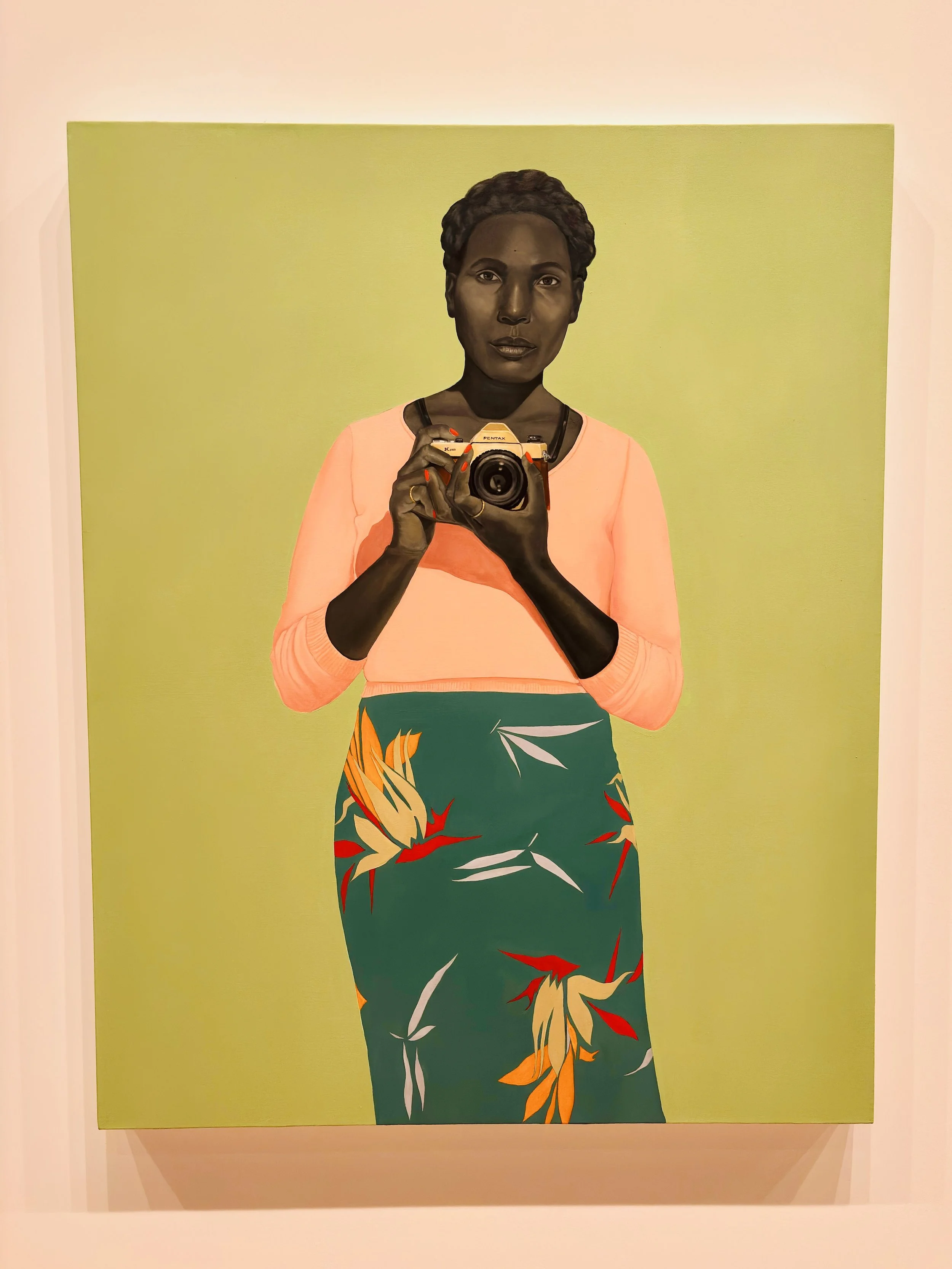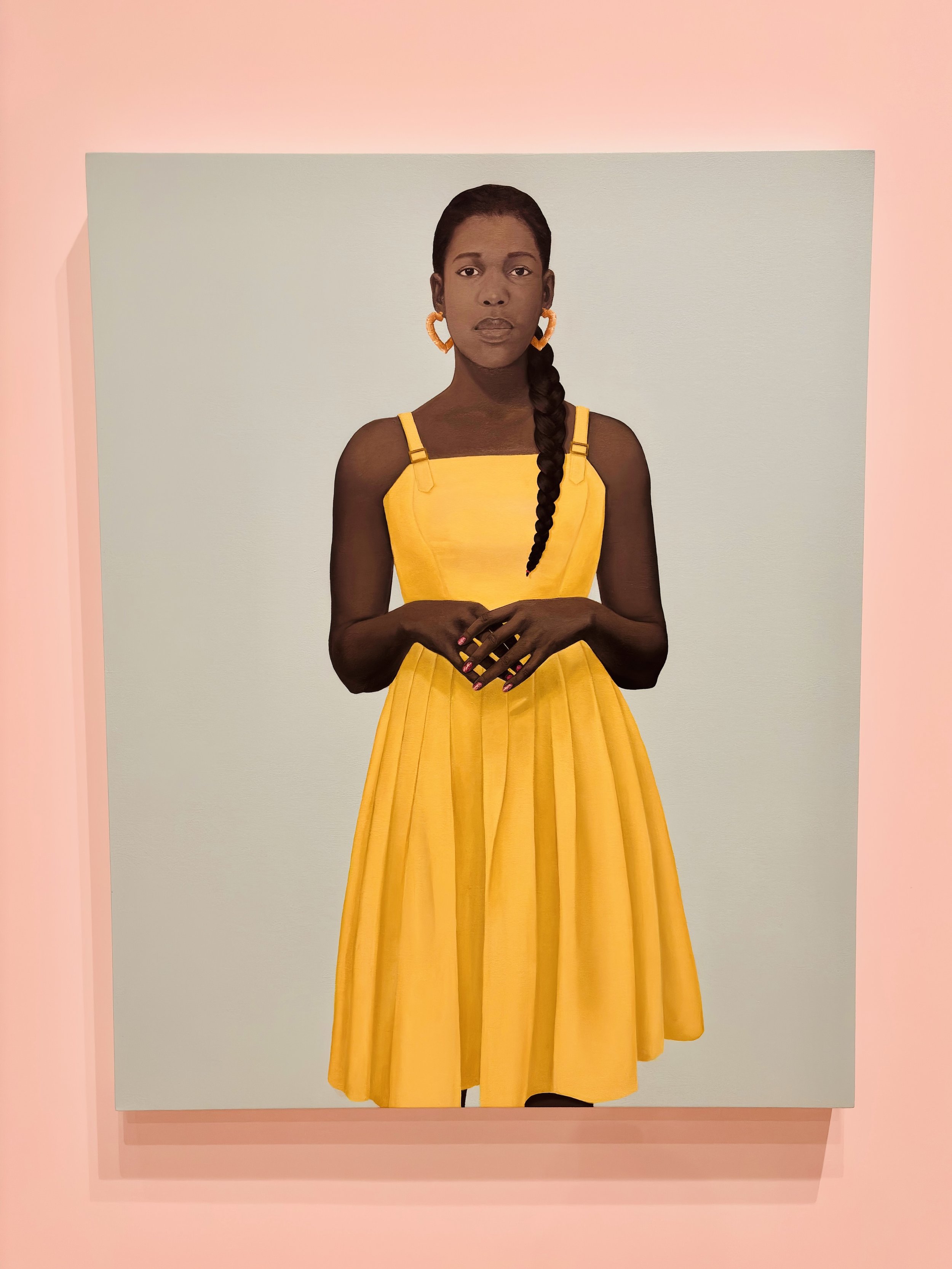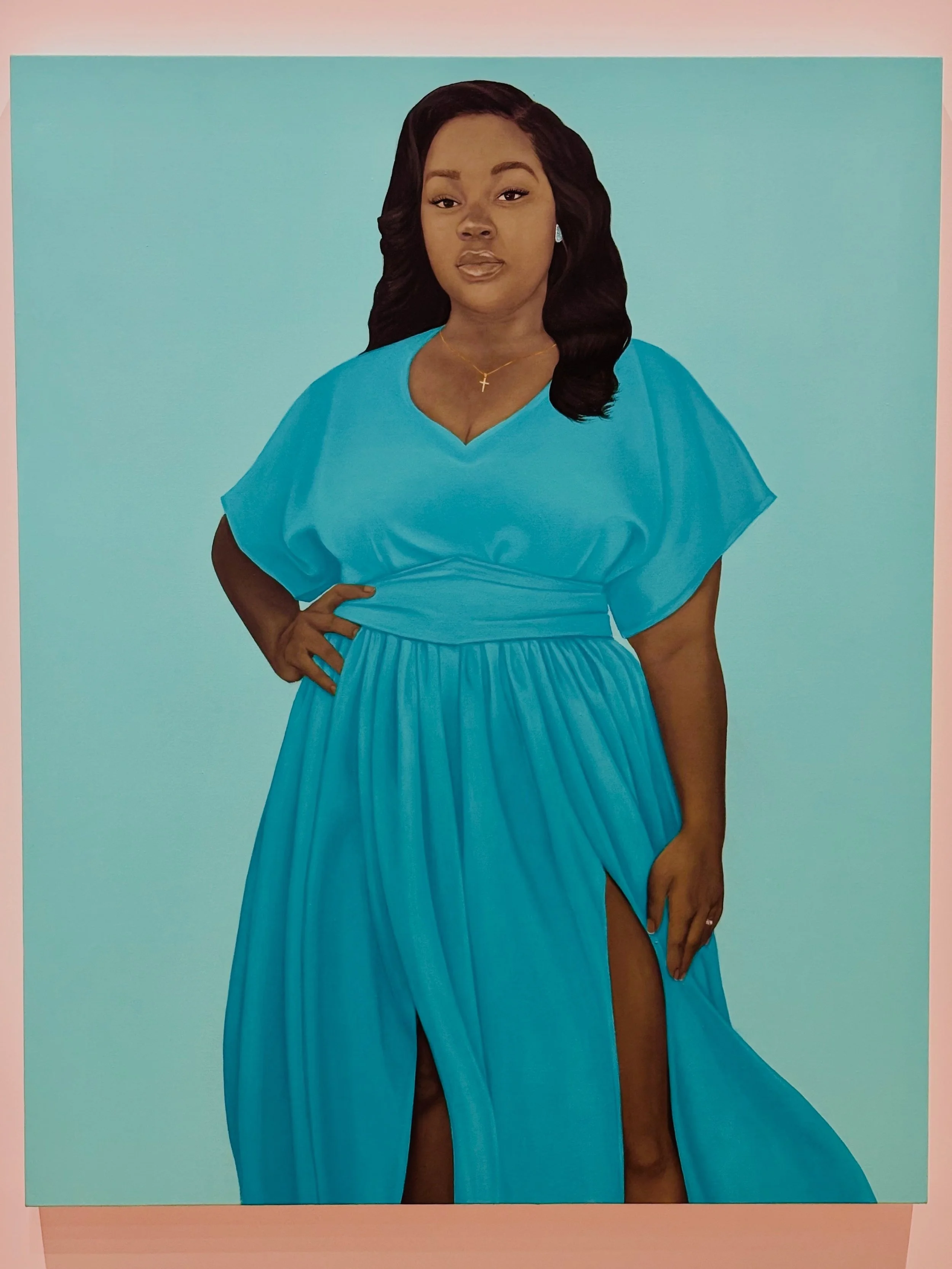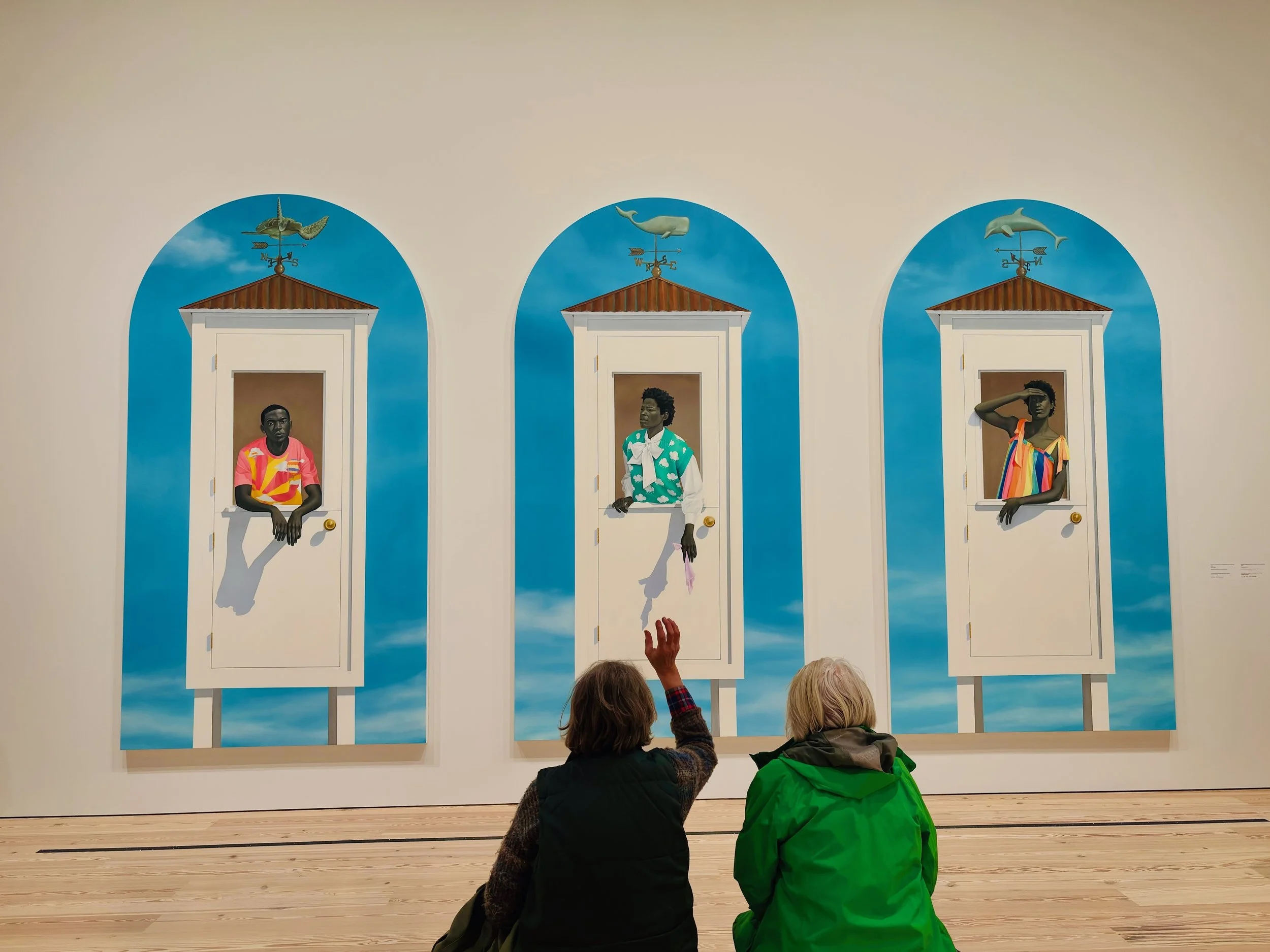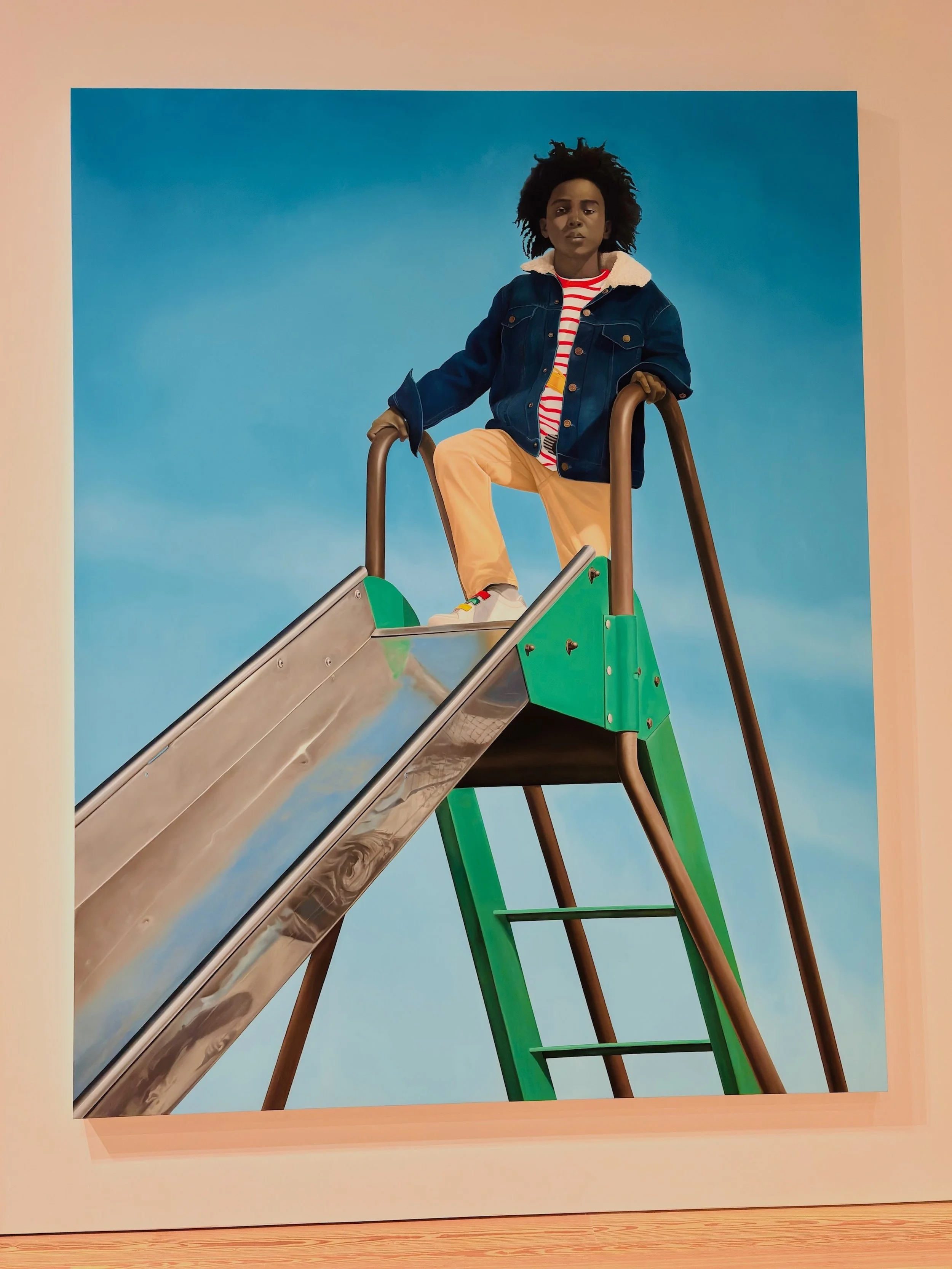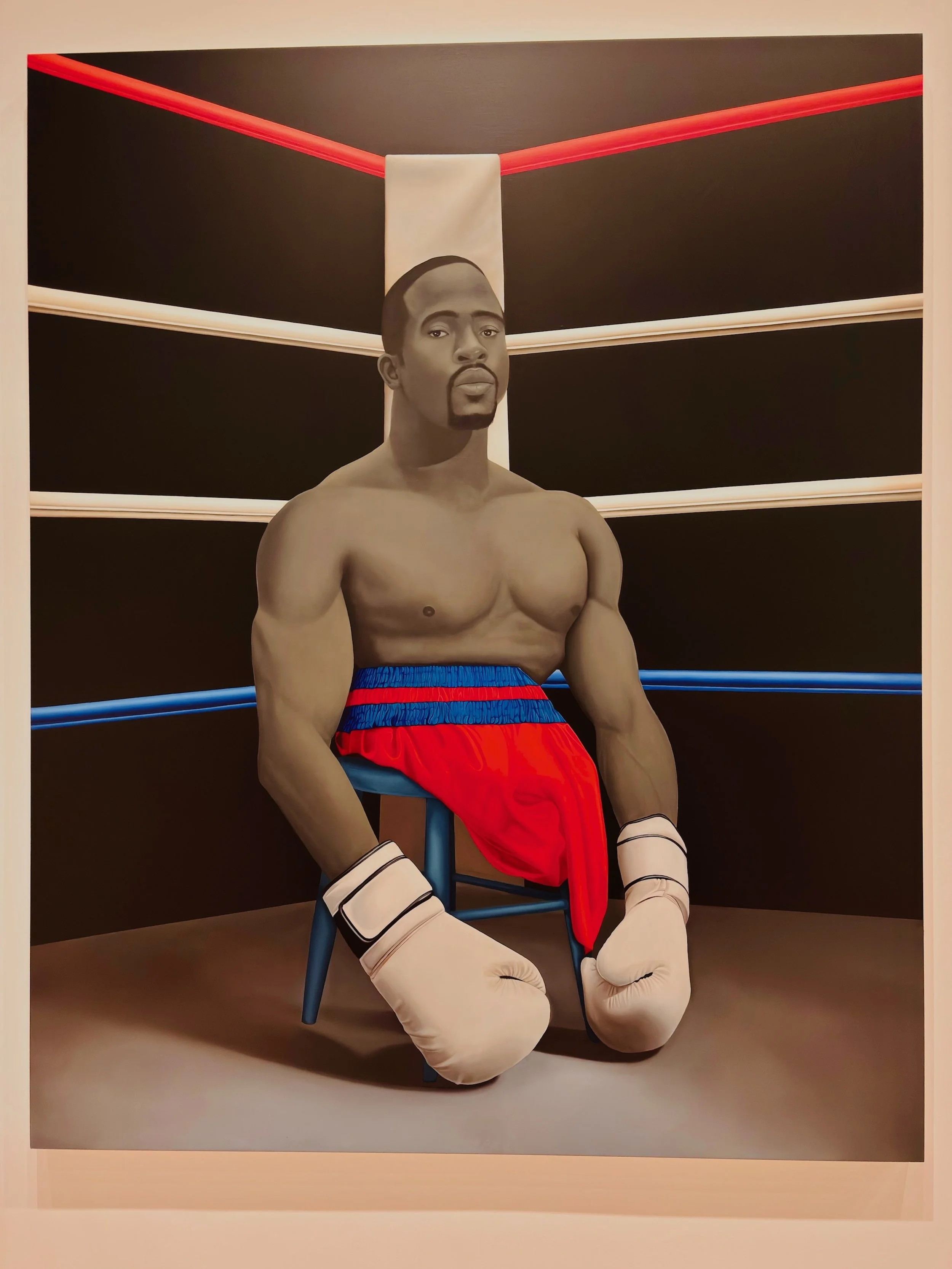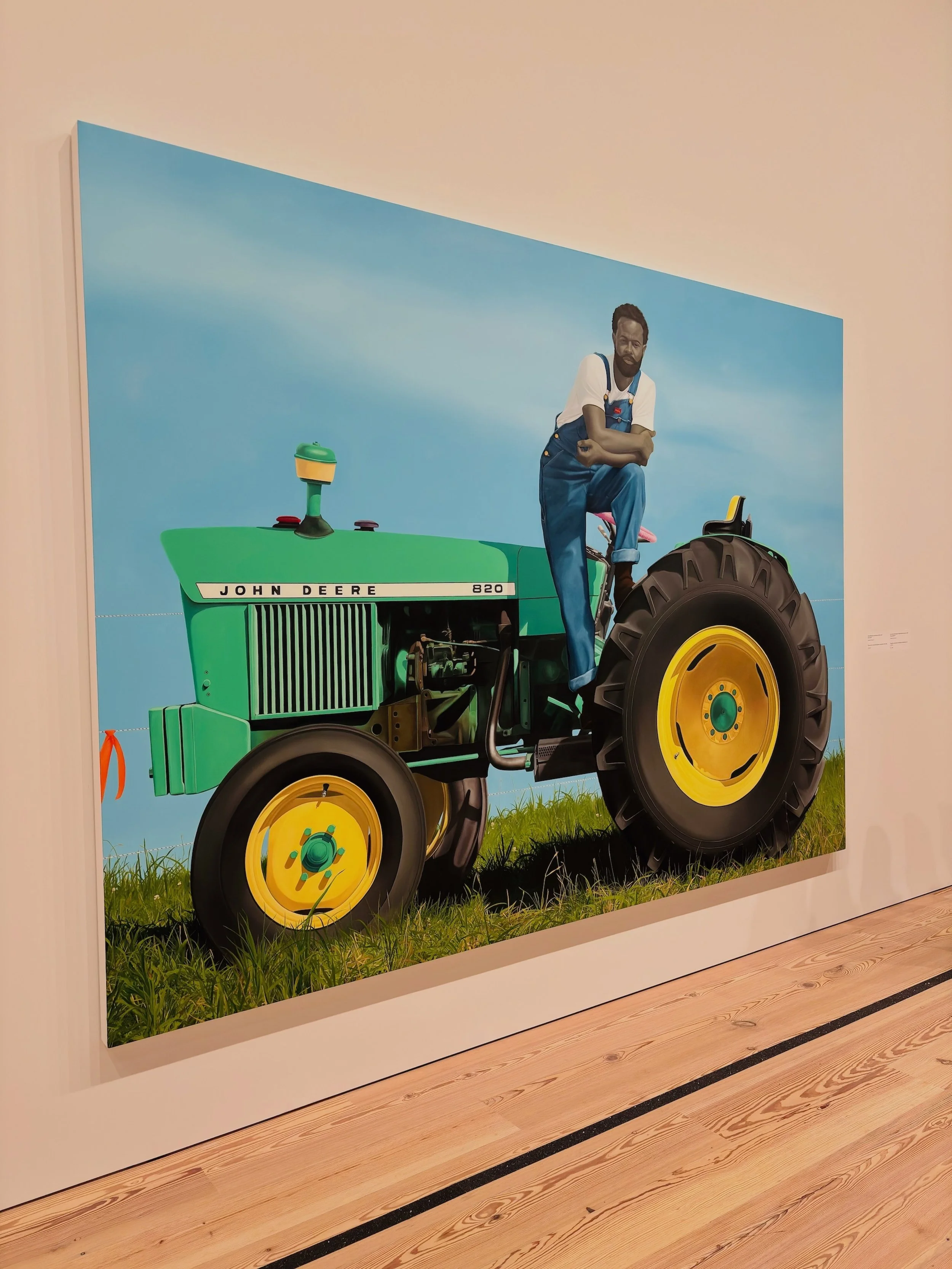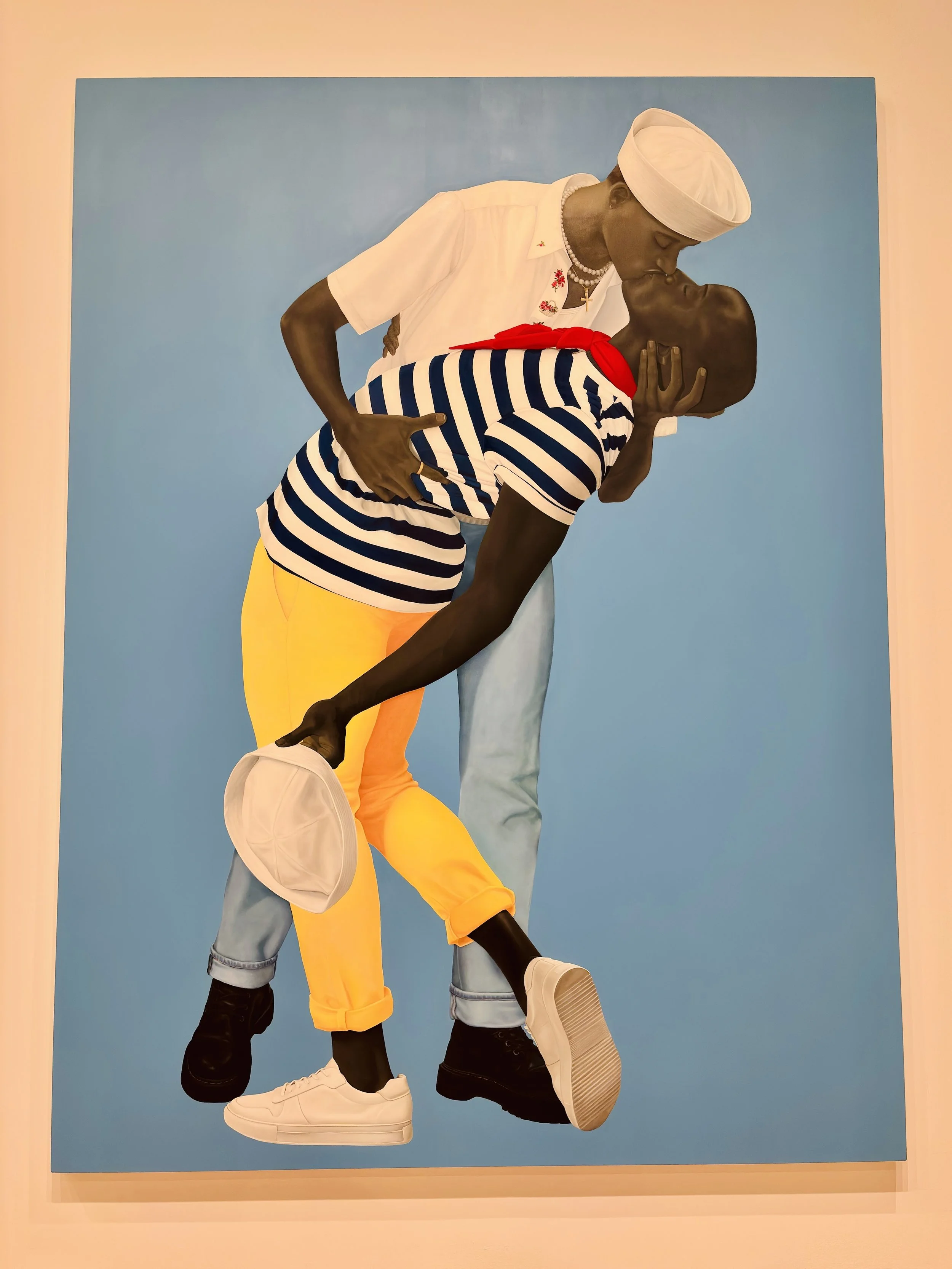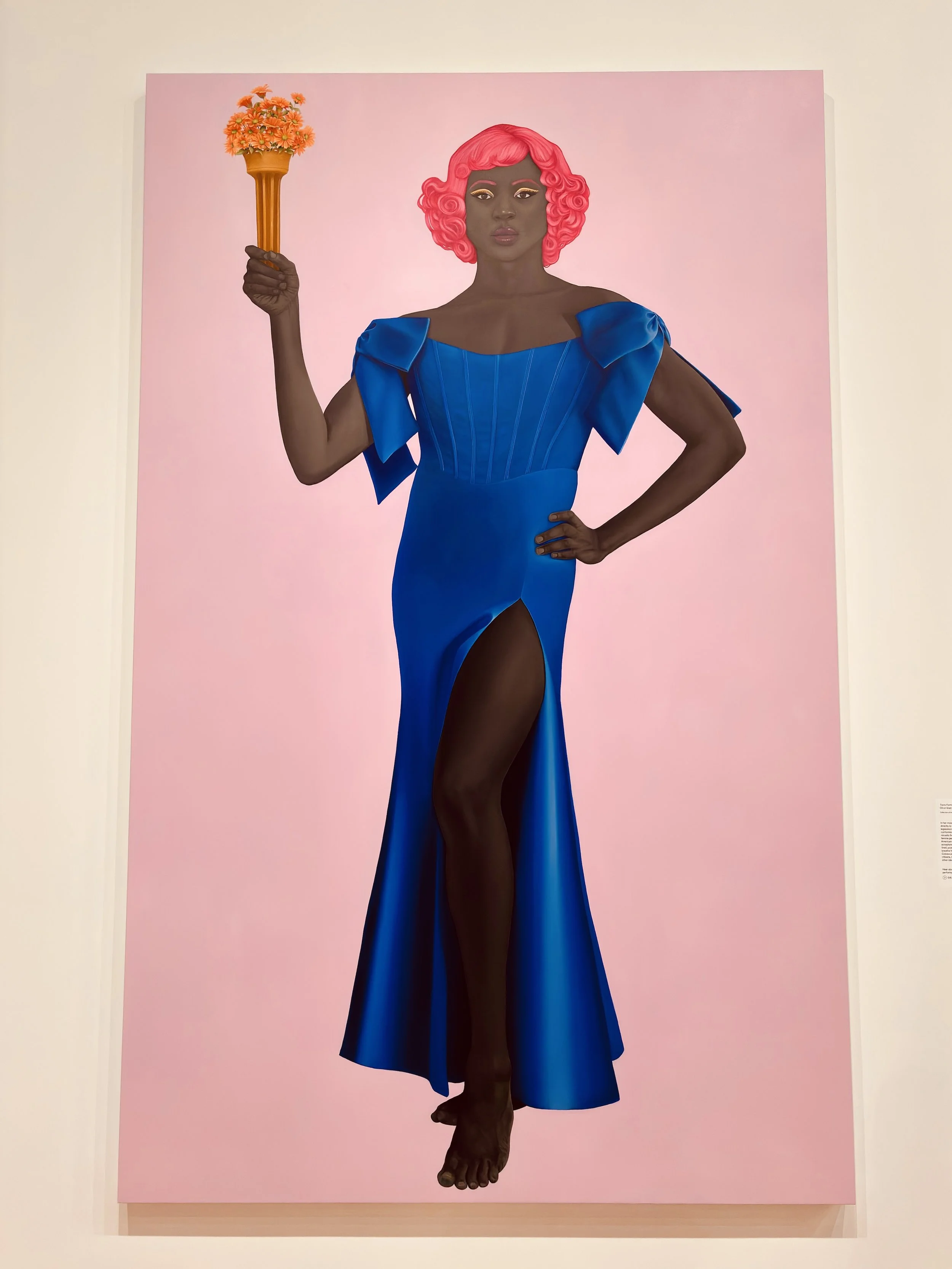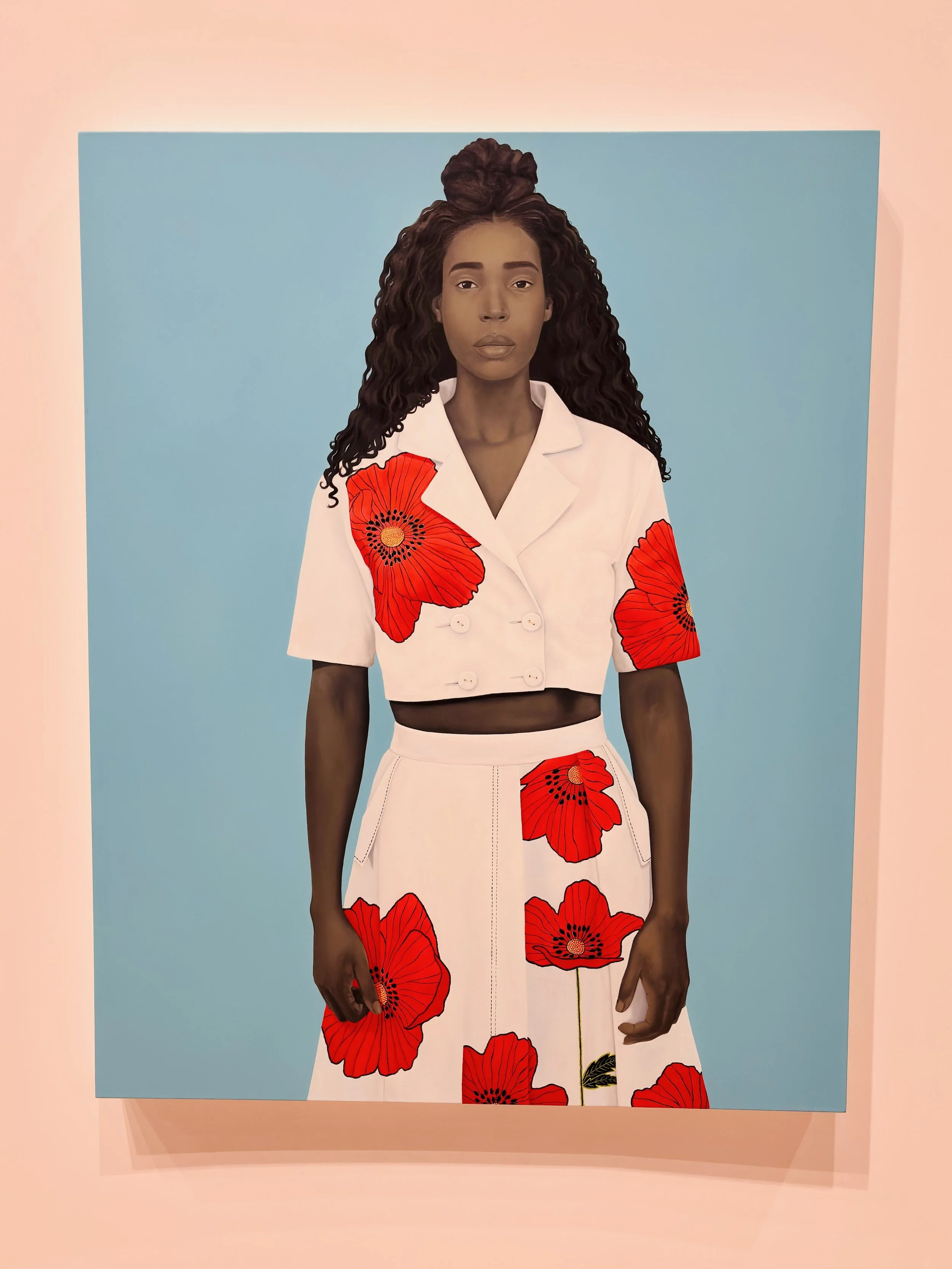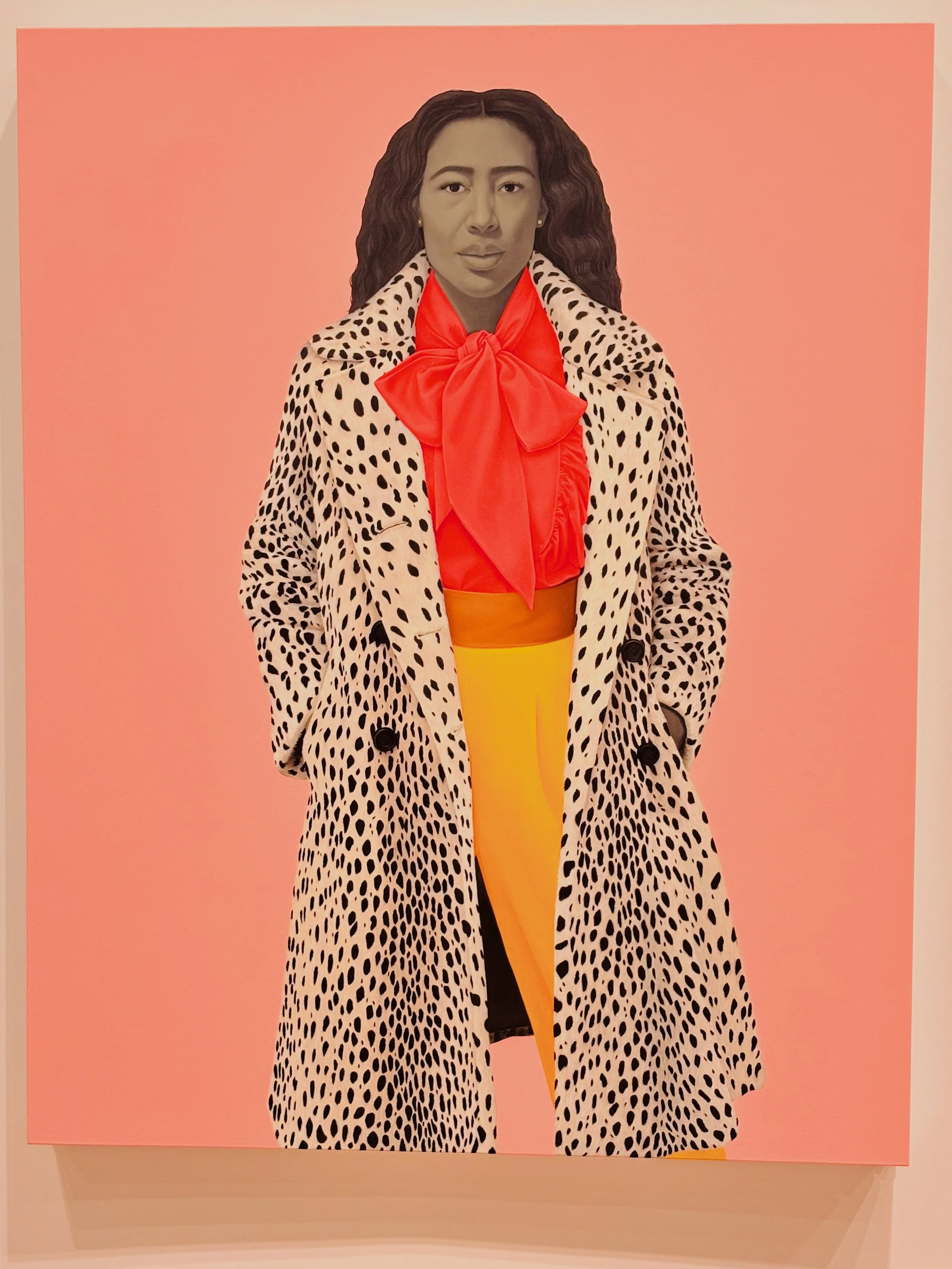
The first thing that draws us into Amy Sherald’s paintings is color. It is luminous, unexpected, and impossible to separate from the people who inhabit each composition. Against vivid backgrounds, her figures appear with a remarkable sense of presence, dressed with intention and carrying themselves with a quiet confidence that immediately holds our attention.
At the Whitney Museum of American Art, Amy Sherald: American Sublime, on view from April 9 through August 10, 2025, brings together portraits that feel less like formal studies of individuals and more like glimpses into fully imagined lives. Sherald begins with real people, yet what emerges on the canvas feels expansive. Each subject seems to exist beyond the frame, with a private interior world that belongs entirely to them.
There is an extraordinary calm in these paintings. Expressions are often restrained, gestures are deliberate, and nothing feels accidental. Clothing becomes part of the storytelling, while color creates an atmosphere that is at once contemporary and dreamlike. The result is portraiture that feels deeply personal without asking its subjects to explain themselves.
As we move through the exhibition, we find ourselves lingering over the details: a particular expression, the posture of a figure, the relationship between a garment and its background. These are the moments our photographs try to hold onto. They capture some of the vivid color and striking compositions that stay with us after leaving the galleries, even though the experience of standing before the paintings is something photographs can only partially convey.
Sherald's portraits also invite a different kind of looking. Her subjects are not defined by hardship or reduced to the history surrounding them. They possess agency, individuality, beauty, and an unmistakable sense of self. There is freedom in that distinction, and it gives the exhibition much of its emotional power.
The title American Sublime begins to feel especially fitting as the exhibition unfolds. The paintings locate something extraordinary within everyday lives, allowing ordinary moments of presence, style, confidence, and contemplation to become worthy of our fullest attention.
We leave the exhibition thinking about how powerful it can be simply to see someone represented with such care. Sherald does not ask her subjects to become larger than life. She gives them something more meaningful: the space to be fully themselves.